

Welcome to Feel Good January: Regulate. Replenish. Rise.
Your nervous system is begging you to do January differently.
Not the restrictive, “fix yourself” kind of different that leaves you white-knuckling through kale smoothies and guilt spirals by January 10th. The supportive, actually-sustainable kind that works with your body instead of against it.
Here’s what I know:
- You’re tired of the New Year resolution cycle that promises transformation but delivers exhaustion.
- You’re navigating perimenopause or menopause, or dealing with the weight of chronic stress that’s left your hormones, energy, and nervous system completely dysregulated.
- You’re struggling with stubborn weight gain, hormone imbalance, adrenal fatigue, and feeling like your body isn’t responding anymore.
Feel Good January is different.All month long, I’m sharing simple recipes and micro habits designed specifically for women over 35 to support your hormones, nervous system, cortisol levels, metabolism, and gut health. These aren’t random wellness tips, they’re strategic, science-backed changes rooted in clinical nutrition and women’s health that actually work for midlife women dealing with insulin resistance, inflammation, and hormonal shifts.
This isn’t about overhauling your entire life or adding more to your already-full plate. It’s about small, nourishing shifts that fit into your life as it is. Each habit takes minutes but delivers real results for blood sugar balance, energy, brain fog, sleep, mood swings, and hormonal harmony.Because you deserve to feel your best, not through restriction and willpower, but through regulation, replenishment, and rising into the vibrant health that’s been waiting for you all along.

Why You Get Sick Every January: The Post-Holiday Cortisol Crash
December hits different. Between the late nights, sugar-heavy celebrations, endless to-do lists, and shorter days with less vitamin D, your adrenals and immune system take a beating. And January? That’s when you feel it.
You wake up exhausted even after eight hours of sleep. You reach for coffee just to feel normal. You catch every cold going around. Your hormones feel completely off. And no matter what you do, you can’t seem to shake that underlying fatigue.
The Pattern You’re Stuck In
Here’s what I see in my practice every single January: women who powered through December on cortisol and coffee, neglecting their nutritional needs, are now experiencing the crash. The holiday aftermath looks like compromised immunity right when cold and flu season peaks, hormone imbalances that make perimenopause symptoms worse, energy crashes that no amount of caffeine can fix, and mood swings that feel impossible to control. Sound familiar? You’re not imagining it. There’s actual science behind why January feels this hard.

What’s Really Happening:
The HPA Axis Connection
Through the HPA Axis—the direct connection between your hypothalamic-pituitary-adrenal (stress) system and your endocrine (hormone) system—chronic stress keeps cortisol elevated, which suppresses adrenal function and weakens your immune response.
Think of your HPA axis as the command center for your body’s stress response. When you’re constantly stressed (hello, December), your hypothalamus sends signals to your pituitary gland, which tells your adrenal glands to pump out cortisol. In acute situations, this system is brilliant, it helps you handle real threats. But chronic activation? That’s where the problems begin.
Research shows that prolonged cortisol exposure leads to impaired HPA axis feedback, glucocorticoid receptor resistance, and paradoxical cortisol dysregulation. This creates a pro-inflammatory state that promotes cytokine imbalance, weakens protective immune mechanisms, and shifts your immune response toward dysfunction. The result: you’re more susceptible to infections, inflammation, and autoimmune responses.
Why Women Over 35 Feel This More Intensely
If you’re navigating perimenopause or menopause, this stress-immunity connection hits even harder. Declining estrogen already affects your metabolism, blood sugar regulation, and stress response. Add chronic stress on top of hormonal shifts, and your body struggles to maintain homeostasis. Your immune system, which depends on adequate vitamin C to support both innate and adaptive immune defense, becomes compromised when stress depletes your nutrient stores.
Vitamin C contributes to immune defense by supporting various cellular functions of immune cells. It accumulates in phagocytic cells like neutrophils and enhances chemotaxis, phagocytosis, and generation of reactive oxygen species, all critical for fighting off pathogens.
When you’re stressed and depleted, your immune cells can’t function optimally.

The Clinical Nutrition Solution
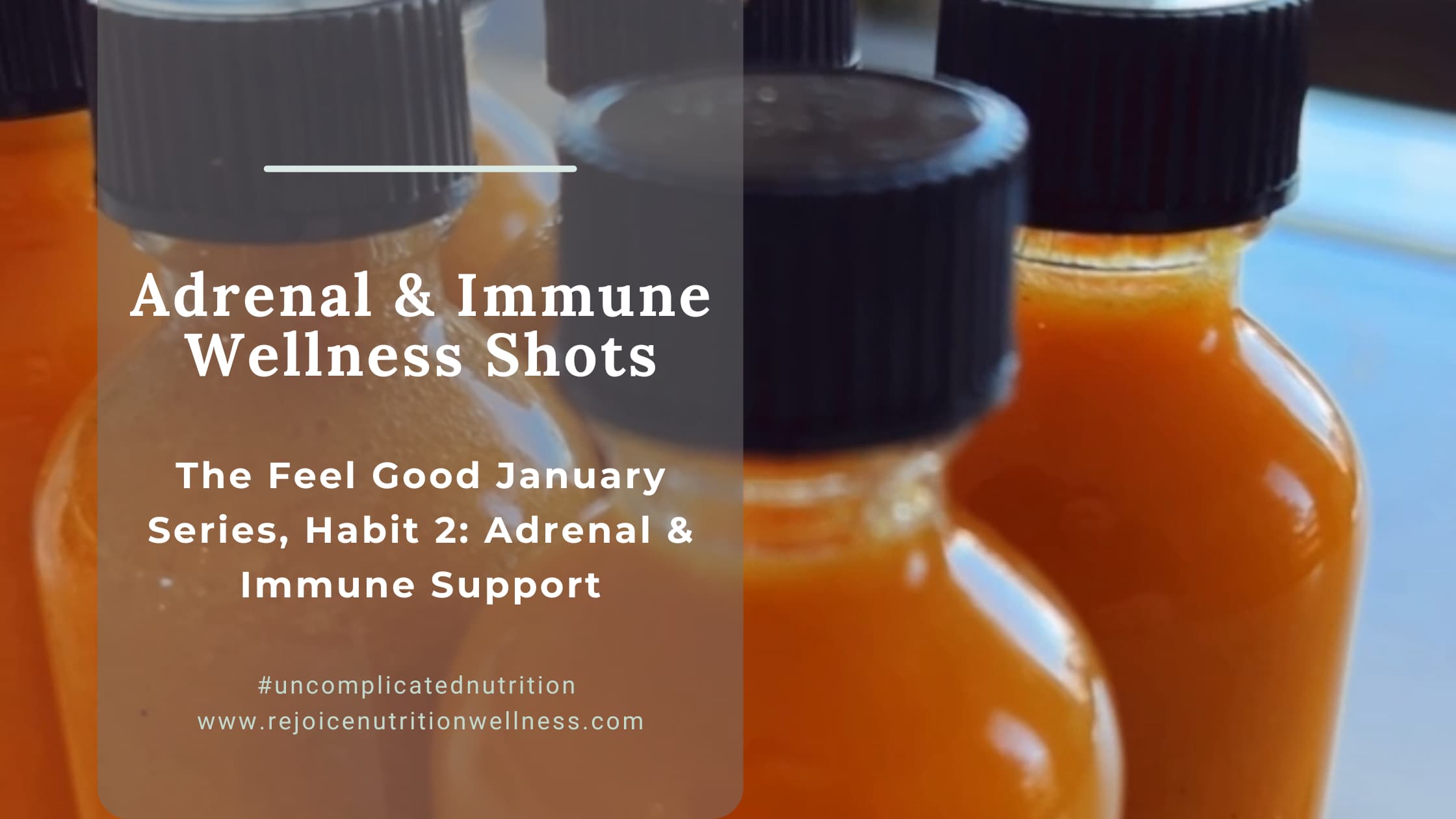
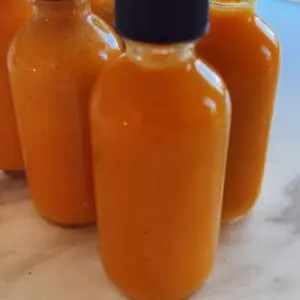
This is where targeted nutrition becomes crucial. You can’t just “rest more” or “stress less”, you need to actively support your body’s stressed systems with specific nutrients that address cortisol regulation, immune function, and inflammation simultaneously.That’s why every January, I make these Adrenal + Immune Wellness Shots.
They’re not a trendy wellness fad. They’re clinical nutrition that actually works, backed by research and designed to address the specific physiological mechanisms that are breaking down in your body.
The Science Behind the Ingredients
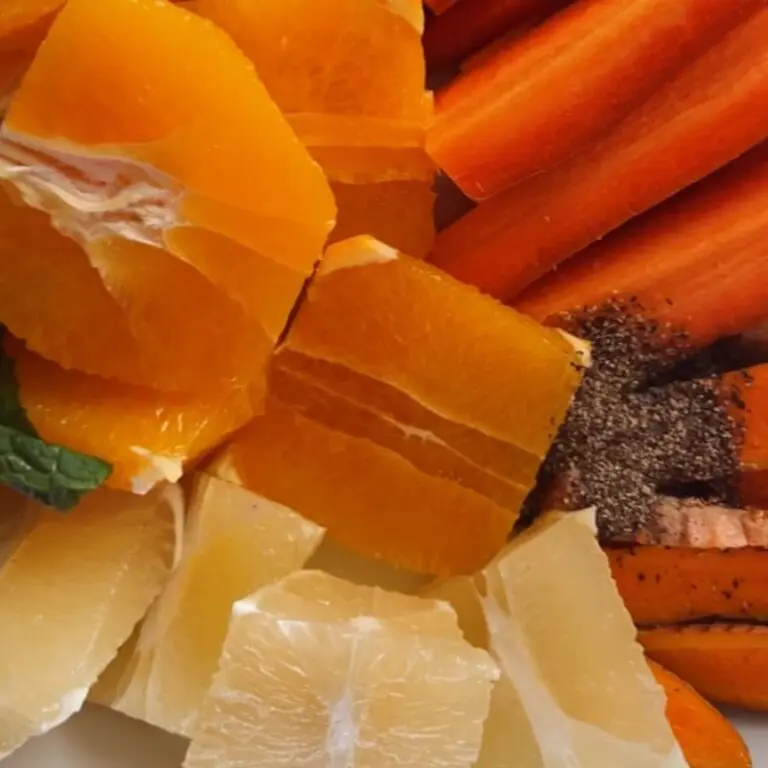
Vitamin C (from oranges, lemon, carrots):
These citrus fruits and vegetables deliver high concentrations of vitamin C, which supports epithelial barrier function against pathogens and promotes oxidant scavenging activity. Your immune cells need vitamin C to function—and stress burns through it rapidly. Adequate vitamin C intake provides immune cells with the resources they need to fight infection while supporting the body’s natural stress response.
Turmeric (curcumin):
Curcumin has been shown to be a potent immunomodulatory agent that modulates the activation of T cells, B cells, macrophages, neutrophils, natural killer cells, and dendritic cells. It downregulates the expression of proinflammatory cytokines including TNF, IL-1, IL-2, IL-6, IL-8, and IL-12, most likely through inactivation of the transcription factor NF-kappaB. This anti-inflammatory action helps calm the chronic inflammation that chronic stress creates in your body.
Ginger (gingerol):
Ginger possesses multiple biological activities, especially antioxidant and anti-inflammatory capacities. Its bioactive compounds inhibit prostaglandin and leukotriene biosynthesis through suppression of COX-2 and lipoxygenase pathways. They also inhibit the synthesis of pro-inflammatory cytokines, helping regulate immune system response and reduce inflammatory processes that contribute to immune dysregulation.
Black Pepper (piperine):
This isn’t just for flavor, black pepper dramatically increases the bioavailability of curcumin, allowing your body to actually absorb and use the turmeric’s powerful compounds.
Raw Honey:
Provides natural antimicrobial properties and contains enzymes, antioxidants, and trace minerals that support immune function. Unlike refined sugar, raw honey doesn’t spike blood glucose in the same way, making it a better choice for maintaining stable energy.
Coconut Water:
Naturally rich in electrolytes and minerals, coconut water helps maintain hydration and cellular function, which is essential when your body is under stress.
Celtic Sea Salt:
Provides essential trace minerals that support adrenal function and electrolyte balance, both of which are crucial for stress response and hormone regulation.

Adrenal + Immune Wellness Shots: Your Daily Defense Recipe
Equipment
- 1 blender
- 1 fine mesh strainer
- container for juice I have added the amazon link to the shot containers I used in the recipe notes
Ingredients
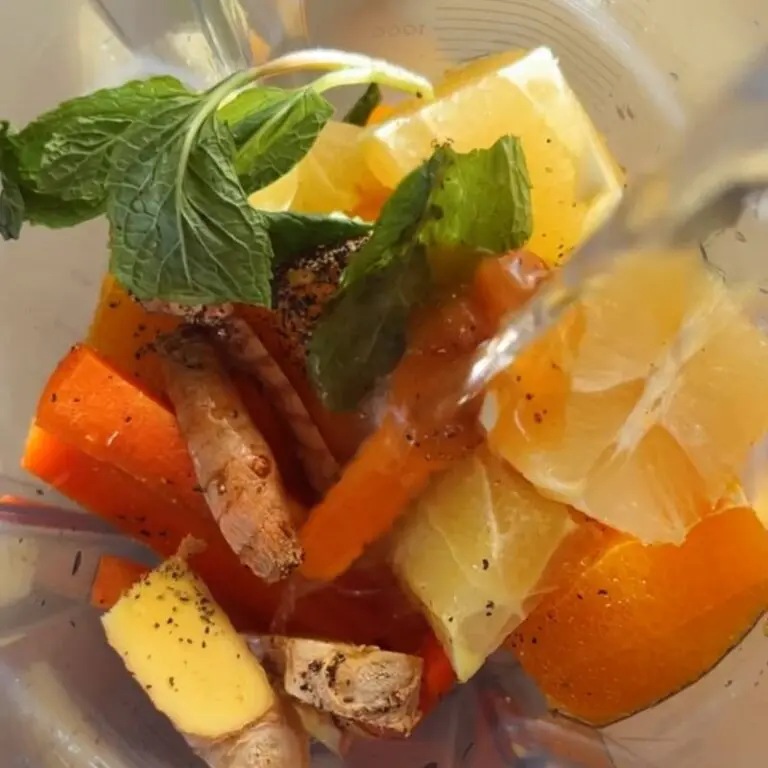
- 1" piece turmeric root
- 1" piece ginger root
- 1 large lemon, peeled
- 2 medium oranges, peeled
- 1 sprig mint
- 2 cups unsweetened coconut water
- 2 tbsp raw honey
Instructions
- Prep ingredients: Peel the oranges, lemon, ginger, and turmeric. Wash and roughly chop the carrots. Remove mint leaves from stem.
- Blend: Add all ingredients to a high-speed blender. Blend on high for 1-2 minutes until completely smooth and well combined.
- Strain: Pour the mixture through a fine-mesh strainer into a large bowl or measuring cup. Use a spoon to press and extract as much liquid as possible. Discard the pulp.
- Store: Pour the strained liquid into a glass jar or bottle with a tight-fitting lid. Store in the refrigerator for up to 2 weeks.
- Serve: Take 2 oz (1/4 cup) daily, preferably in the morning. Shake well before each use as natural separation may occur.
Notes
The shots are most effective when taken consistently for 2-4 weeks.
Natural separation is normal; simply shake before drinking.
If you find the flavor too strong, you can dilute with a bit more coconut water. Nutrition Information (per 2 oz shot): Calories: ~25
Carbohydrates: 6g
Sugars: 4g (natural from fruit)
Fiber: 1g
Protein: <1g
Fat: <1g
Vitamin C: ~30mg (40% DV)
Potassium: ~100mg

NEED MORE SUPPORT?
Ready to take your health to the next level? Here’s how we can work together:
21-Day Gut Reset for Hormones – Transform your gut health to support hormones, boost energy, and reduce inflammation with this comprehensive reset program.
Eat with Ease for Hormonal Harmony – Learn how to nourish your body through perimenopause and menopause with my signature eating approach that supports hormones naturally.
Book a Free 15-Minute Discovery Call – Let’s talk about your specific challenges and create a custom nutrition and wellness coaching plan designed just for you.
REFERENCES
- Carr AC, Maggini S. Vitamin C and Immune Function. Nutrients. 2017 Nov 3;9(11):1211. doi: 10.3390/nu9111211. PMID: 29099763.
- Jagetia GC, Aggarwal BB. “Spicing up” of the immune system by curcumin. J Clin Immunol. 2007 Jan;27(1):19-35. doi: 10.1007/s10875-006-9066-7. PMID: 17211725.
- Ballester P, Cerdá B, Arcusa R, Marhuenda J, Yamedjeu K, Zafrilla P. Effect of Ginger on Inflammatory Diseases. Molecules. 2022 Oct 25;27(21):7223. doi: 10.3390/molecules27217223. PMID: 36364048.
- Chronic Stress and Autoimmunity: The Role of HPA Axis and Cortisol Dysregulation. Int J Mol Sci. 2024 Oct 14;26(20):9994. doi: 10.3390/ijms26209994. PMID: 41155288.
Disclaimer: This content is for educational purposes only and is not intended to diagnose, treat, cure, or prevent any disease. The information provided should not replace professional medical advice. Please consult with your healthcare provider before making any changes to your diet or supplement routine, especially if you have existing health conditions or are taking medications. Individual results may vary.

