

The protein advice that worked in your 30s quietly stops working once perimenopause begins. Same meals, same effort, and suddenly you’re hungry an hour after breakfast, dragging by mid-afternoon, and watching the scale hold still no matter what you do.
If that’s you, I want you to hear this first: it’s not you, and it’s not a matter of trying harder. Your body has changed, and the amount of protein it needs has changed right along with it. Once you understand that one shift, a lot of what’s been frustrating you starts to make sense.
Why Protein Needs Change in Perimenopause & Beyond
As you move through perimenopause and into menopause, your estrogen levels begin to fluctuate and decline. One of estrogen’s quieter jobs was helping you hold on to lean muscle, so as it drops, muscle becomes harder to keep and easier to lose. That matters more than it sounds, because muscle is one of the biggest things supporting your metabolism. When you lose muscle, your body burns less at rest, which is a big part of why the old approaches stop working and the weight settles in differently than it used to.
Protein is the one thing that helps rebuild and protect that muscle. It also does two things you feel day to day: it helps steady your blood sugar so you’re not spiking and crashing, and it keeps you full and satisfied between meals. Most women in this stage are getting nowhere near enough of it.
How Much You Actually Need?
Here’s where I do things differently from a lot of the protein advice out there. You don’t need to weigh yourself, plug your body weight into a formula, and calculate grams per kilo. That kind of math is exactly the thing that makes women give up.
The simple target is this: aim for around 100+g of protein a day.
That’s the amount that supports your muscle, steadies your energy, and keeps you full through the changes of perimenopause. One number, no spreadsheet.
Spread it Out, Don’t Save it for Dinner
Where most women go wrong isn’t just the total, it’s the timing. They have toast or a coffee for breakfast, something light at lunch, and then a big protein-heavy dinner.
Your body uses protein best in steady amounts across the day, so aim for about 25 to 35g at each meal instead of loading most of it at night. This is backed by good research: when the same total protein was split evenly across breakfast, lunch and dinner rather than saved for the evening, it supported about 25% more muscle building over 24 hours, from the same food.
Eating it evenly simply works better.
And breakfast is the meal most women skip on protein, even though it’s the one that steadies your whole day. In studies, a protein-rich breakfast of around 25-30g produced far more muscle support than a light 10g one, and in women specifically, a 30 to 39g protein breakfast meant less hunger, smaller blood sugar swings, and less reaching for snacks later. Start your protein at breakfast and the rest of the day gets easier.
Great Protein Sources (Animal and Plant)
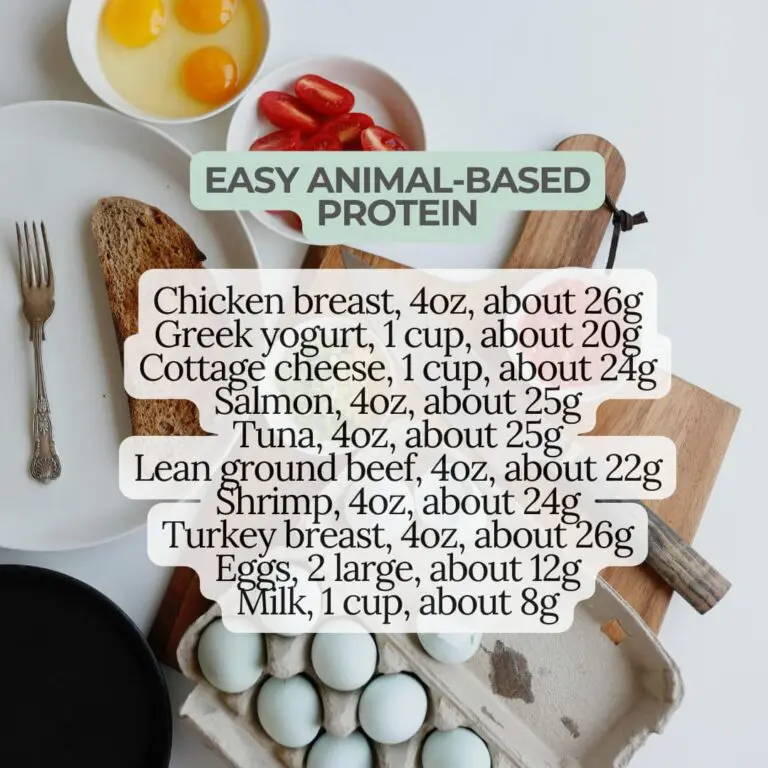
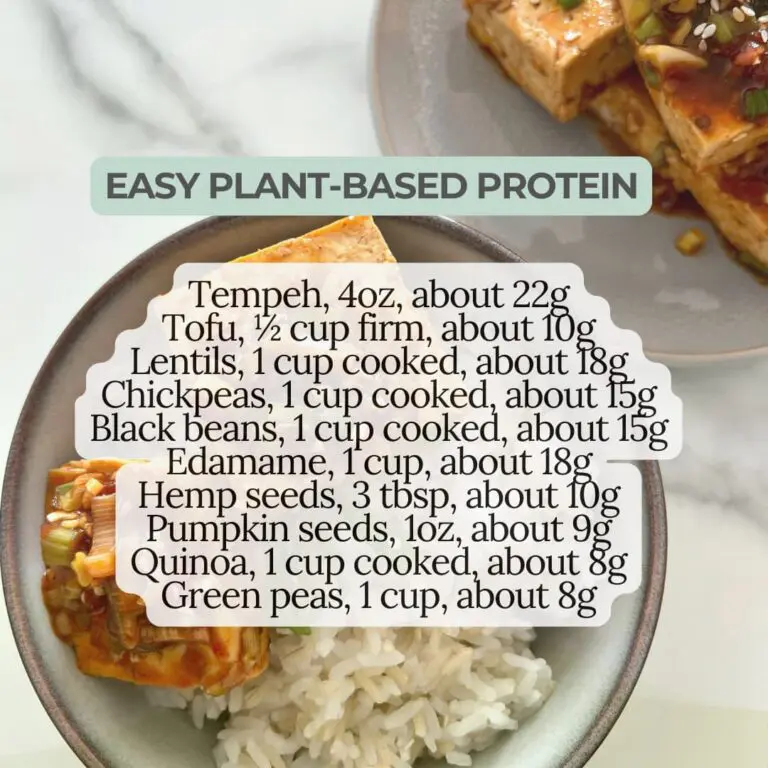
You have great options in both camps, and none of it needs to be fancy. Here are ten of each to pull from, with rough amounts.
What Doesn’t Count as Much as You Think
A few things get marketed as protein wins that quietly leave you short:
Collagen is wonderful for your skin and joints, but it’s low in the building blocks your body needs to rebuild muscle, so it won’t do that particular job.
Most protein bars are closer to a candy bar with a marketing budget than a real protein source. Flip one over and check the label.
A sprinkle of nuts on a salad or a few bites of chicken feels like protein, but it’s rarely enough to make a difference. You’re aiming for 25 to 30g at a sitting, and small amounts don’t add up the way we hope.
A Easy Place to Start: Your Morning Smoothie
If adding protein everywhere feels like a lot, start with one meal. A smoothie is the easiest place to get it right, because you can build it to hit your number without a scoop of powder.
Start with a protein-rich base like milk or a soy base, add a scoop of Greek yogurt or a little cottage cheese, and stir in seeds like hemp or chia. Small additions that stack up to a smoothie that actually holds you to lunch instead of leaving you hunting the pantry by 10.
Want it Done for You?
Grab the Free 3-Day Sample Plan
Want to see exactly what a day like this looks like? I put together a free 3-Day Sample Plan that hits 100g a day with real, everyday meals, no tracking and no math to help you get in more protein at your meals.
Ready to Go Deeper?
The High Protein Hormone Guide:
If you love understanding the why and want the full picture, this is my 176-page guide to protein in perimenopause & beyond. It comes with a 7-day sample meal plan, and 120 whole-food, protein-rich recipes with no powders or bars. It’s the do-it-yourself deep dive, and it’s just $19.99.
The Feel Great in 8 Program:
And if you’d rather have it fully done for you, this is what we do inside my 8-week program. Every day you nail your 100-30-50 Method without thinking about it, 100+g protein, 30g fibre, 50g healthy fats, and your weekly menu shows up in your inbox. No planning, no guessing, no starting over on Monday. You just eat, feel good, and keep going. Join the Next Round! Only 40 Base Spots and 12 VIP Seats available each round.

References
- Mamerow MM, et al. (2014). Dietary Protein Distribution Positively Influences 24-h Muscle Protein Synthesis in Healthy Adults. Journal of Nutrition, 144(6):876-880.
- Postmenopausal osteoporosis coexisting with sarcopenia: the role and mechanisms of estrogen. (2023). Journal of Endocrinology, 259(1).
- Menopause, Female Sex Hormones, Skeletal Muscle Mass and Muscle Protein Turnover in Humans. Narrative review (NCBI, PMC12916153).
- Acute appetitive and metabolic effects of protein-rich breakfast meals in overweight premenopausal women. (2015). Nutrition Journal, 14:23.