

Welcome to Feel Good January: Regulate. Replenish. Rise.
Your nervous system is begging you to do January differently. Not the restrictive, “fix yourself” kind of different that leaves you white-knuckling through kale smoothies and guilt spirals by January 10th. The supportive, actually-sustainable kind that works with your body instead of against it.
Here’s what I know:
You’re tired of the New Year resolution cycle that promises transformation but delivers exhaustion. You’re navigating perimenopause or menopause, or dealing with the weight of chronic stress that’s left your hormones, energy, and nervous system completely dysregulated. You’re struggling with stubborn weight gain, hormone imbalance, adrenal fatigue, and feeling like your body isn’t responding anymore.
Feel Good January is different.
All month long, I’m sharing simple recipes and micro habits designed specifically for women over 35 to support your hormones, nervous system, cortisol levels, metabolism, and gut health. These aren’t random wellness tips, they’re strategic, science-backed changes rooted in clinical nutrition and women’s health that actually work for midlife women dealing with insulin resistance, inflammation, and hormonal shifts.
This isn’t about overhauling your entire life or adding more to your already-full plate. It’s about small, nourishing shifts that fit into your life as it is. Each habit takes a minutes but delivers real results for blood sugar balance, energy, brain fog, sleep, mood swings, and hormonal harmony.
Because you deserve to feel your best, not through restriction and willpower, but through regulation, replenishment, and rising into the vibrant health that’s been waiting for you all along.

HABIT 1: PROTEIN-PACKED BREAKFAST
25-35+ Grams of Protein in the Morning
One of the most powerful micro habits for your hormones, nervous system, and cortisol: starting your day with 25-35+ grams of protein.
This isn’t just about building muscle or staying full (though those are nice bonuses). Protein at breakfast stabilizes blood sugar, which directly impacts cortisol regulation, hormone balance, energy, and how your nervous system responds to stress throughout the entire day. Whether you’re navigating perimenopause, menopause, or chronic stress, this matters.
You know that feeling when…You drag yourself out of bed, hit snooze three times, finally get up and grab coffee on an empty stomach because “you’re not hungry.” By 10am you’re starving, shaky, reaching for whatever’s quickest. By 2pm you’re in a brain fog so thick you can barely think. By dinner you’re ravenous and eating everything in sight, then snacking all night because your body is playing catch-up. Sound familiar? You’re not broken. Your blood sugar and hormones are just screaming for protein at breakfast. This was one of the most powerful changes I made for my own hormones, and it’s the first habit I teach every single client. Blood sugar stabilization through clinical nutrition might sound boring, but it works.

The Science Behind Protein at Breakfast: Blood Sugar Stability for Hormone Health
When you start your day with 25-35+ grams of protein, you’re giving your body the building blocks to stabilize blood sugar for hours. Research published in the American Journal of Clinical Nutrition shows that high-protein breakfasts significantly reduce postprandial glucose spikes and improve insulin sensitivity throughout the day, particularly important for women experiencing the metabolic changes of perimenopause. This matters because unstable blood sugar triggers cortisol release, disrupts your hormones, and leaves you on an energy rollercoaster that makes every perimenopausal symptom worse.
Cortisol Regulation for Nervous System Support
Protein at breakfast directly impacts your cortisol awakening response, the natural spike that happens when you wake up. Studies in Psychoneuroendocrinology demonstrate that adequate protein intake in the morning helps regulate this cortisol pattern, preventing the dysregulated spikes that contribute to anxiety, sleep disruption, and that “wired but tired” feeling so common in perimenopause. When your cortisol is regulated, your nervous system can actually shift out of sympathetic overdrive, which means better stress resilience, clearer thinking, and more stable energy.
Muscle Preservation and Metabolism in Perimenopause
As estrogen declines during perimenopause, women lose muscle mass at an accelerated rate, directly impacting metabolism and insulin sensitivity. Research in The Journal of Nutrition shows that distributing protein intake across meals, particularly front-loading it at breakfast, enhances muscle protein synthesis and helps preserve lean mass during hormonal transitions. This isn’t about vanity, it’s about maintaining the metabolic health that keeps your energy stable, your blood sugar balanced, and your body functioning optimally.
Common Perimenopause Symptoms This Habit Supports:
- Mid-morning energy crashes and shakiness
- Afternoon brain fog and difficulty concentrating
Intense sugar and carb cravings throughout the day - Feeling “hangry” or irritable before meals
- Stubborn weight gain, especially around the midsection
- Poor sleep quality and waking up at 3am

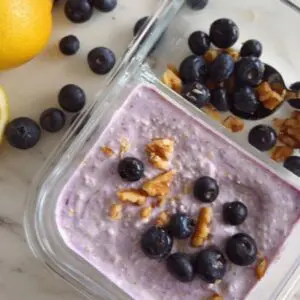
Lemon Blueberry ‘Cheesecake’ Overnight Oats: Your Hormone-Balancing Breakfast
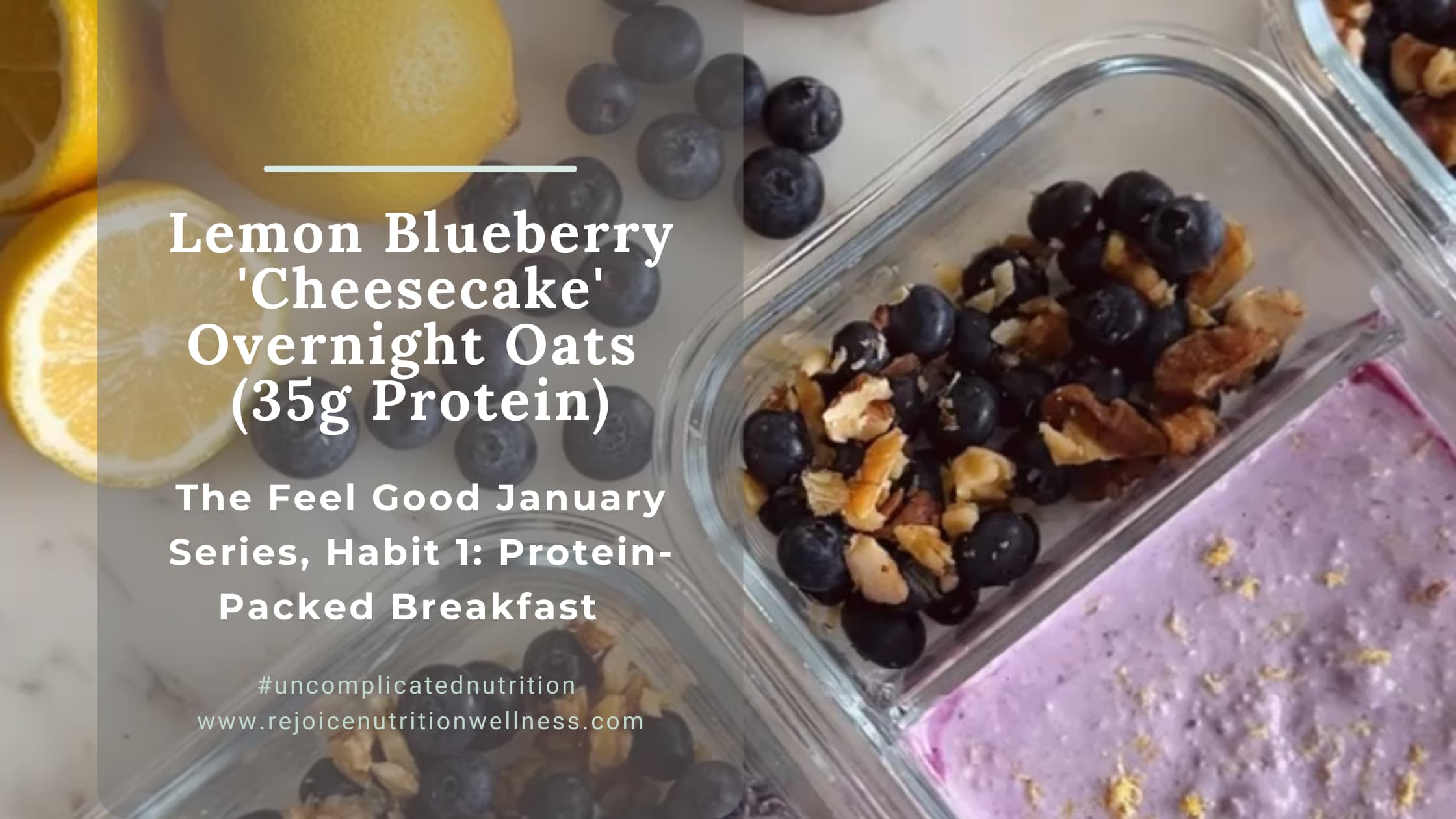
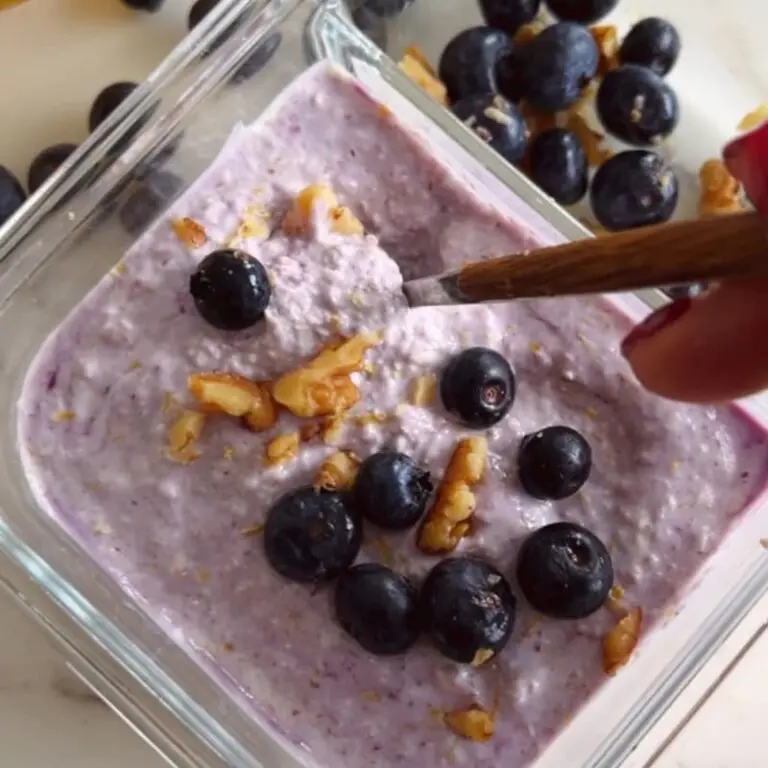
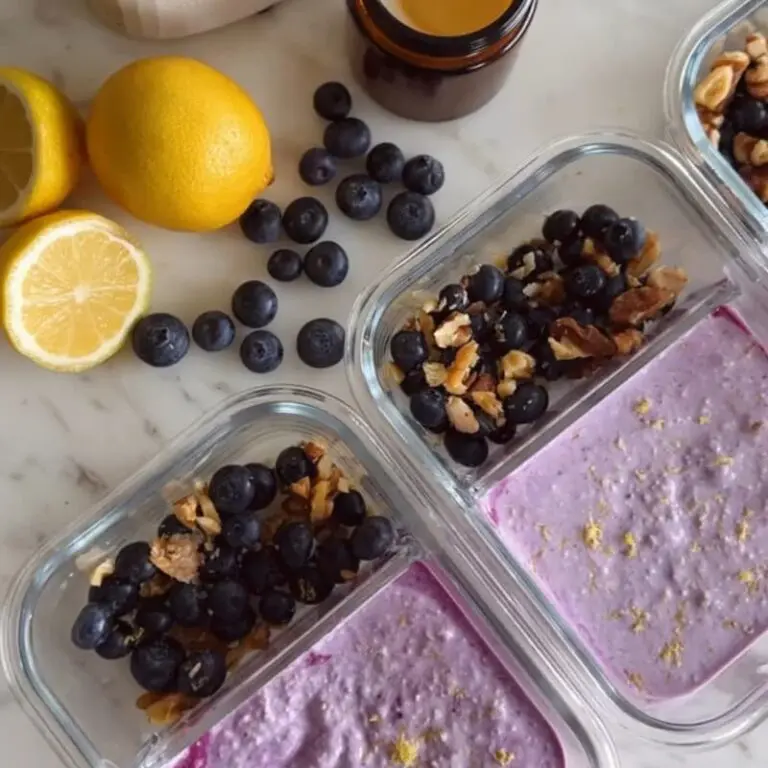
This overnight oats recipe is designed specifically for hormonal health. It’s packed with 35g of complete protein, fiber for gut health and estrogen metabolism, and antioxidants that support inflammation reduction. Plus, it tastes like dessert for breakfast, which makes consistency so much easier.
This recipe got over 2 million views the first time I shared it, and for good reason. It actually works.

Lemon Blueberry 'Cheesecake' Overnight Oats (35g Protein)
Ingredients
Base
- 1/2 cup rolled oats (use gluten-free if needed)
- 1/2 cup high-protein Greek yogurt (or dairy-free alternative)
- 1/2 cup cottage cheese (use lactose-free or vegan tofu cottage cheese; if you don't like cottage cheese, use more yogurt but it won't have that 'cheesecake' taste)
- 1 tbsp ground flax seed
- 1/2 cup milk of choice high protein/ low sugar
- 1 small lemon zest & juice
- 1 pinch sea salt
- 1/8 cup fresh or frozen blueberries or berries of choice
Optional Blueberry Compote:
- 1/4 cup blueberries
- 2 tbsp water
- 1 tbsp lemon juice
- 1 tsp maple syrup or honey
Optional Topping
- 1 tbsp walnuts (adds 2g protein = 37g total)
- extra blueberries
Instructions
- Method 1: Blended & Smooth (My favorite)Add all base ingredients to a blender and blend until completely smoothPour into a jar or containerRefrigerate overnight (or minimum 2 hours) to thicken
- Method 2: StirredMix all base ingredients in a bowl until well combinedTransfer to container and refrigerate overnight
- For the Blueberry Compote:In a small pot, combine blueberries, water, lemon juice, and maple syrupBring to a boil, then reduce heat and simmer 3-5 minutes until berries burstLet cool completelySwirl into overnight oats before serving
Notes
Store in an airtight container in the refrigerator for up to 4 days. Make a batch on Sunday for easy breakfasts all week. Nutrition Highlights:
- 35g protein per serving (37g with walnuts)
- 7g fiber per serving
- Key nutrients: omega-3 fatty acids from flax, calcium and probiotics from yogurt/cottage cheese, antioxidants from blueberries, vitamin E from optional walnuts
- Prep 3-4 jars on Sunday night so you have breakfast ready all week
- Use frozen blueberries when fresh aren't available (they work just as well)
- Keep individual portions of protein powder on hand as a backup if you run out of cottage cheese
- Not a fan of blueberries? Use any berries you love, strawberries, raspberries, blackberries all work beautifully
- Dairy-free? Swap cottage cheese for silken tofu blended smooth, use coconut yogurt, and choose plant-based milk
- Want it sweeter? Add a drizzle of honey or maple syrup, but taste first, the natural sweetness from berries is often enough
- Need more protein? Add a scoop of unflavored collagen or protein powder to hit 40g+

Your Feel Good January Starts Now
Ready to transform your energy and hormone balance? This habit is just one of 18 micro-changes designed for women like you.
Join the Feel Good January email series and get weekly PDFs with habits, recipes, and the science behind each one delivered straight to your inbox. Sign up here to get on the list
Need more support?
Here’s to nourishing yourself with habits that actually work.
With love and science, Jo
References
- Jakubowicz, D., Barnea, M., Wainstein, J., & Froy, O. (2013). High caloric intake at breakfast vs. dinner differentially influences weight loss of overweight and obese women. Obesity, 21(12), 2504-2512. https://pubmed.ncbi.nlm.nih.gov/23512957/
- Gonzalez, J.T., Veasey, R.C., Rumbold, P.L.S., & Stevenson, E.J. (2013). Breakfast and exercise contingently affect postprandial metabolism and energy balance in physically active males.
- British Journal of Nutrition, 110(4), 721-732. https://pubmed.ncbi.nlm.nih.gov/23340006/
- Paddon-Jones, D., Campbell, W.W., Jacques, P.F., Kritchevsky, S.B., Moore, L.L., Rodriguez, N.R., & van Loon, L.J.C. (2015). Protein and healthy aging. American Journal of Clinical Nutrition, 101(6), 1339S-1345S. https://pubmed.ncbi.nlm.nih.gov/25926511/
- Westerterp-Plantenga, M.S., Nieuwenhuizen, A., Tomé, D., Soenen, S., & Westerterp, K.R. (2009). Dietary protein, weight loss, and weight maintenance. Annual Review of Nutrition, 29, 21-41. https://pubmed.ncbi.nlm.nih.gov/19400750/
- Leidy, H.J., Clifton, P.M., Astrup, A., Wycherley, T.P., Westerterp-Plantenga, M.S., Luscombe-Marsh, N.D., Woods, S.C., & Mattes, R.D. (2015). The role of protein in weight loss and maintenance. American Journal of Clinical Nutrition, 101(6), 1320S-1329S. https://pubmed.ncbi.nlm.nih.gov/25926512/

