
Have you ever noticed how stress seems to wreak havoc on everything in your body? Your sleep becomes restless, your digestion feels off, your hormones go haywire, and you feel like you’re constantly running on empty.
Here’s what most women don’t realize: your nervous system is the master controller of your entire body. When it’s dysregulated, it creates a domino effect that impacts your hormones, gut health, sleep quality, metabolism, mood regulation, and even your longevity.
As a women’s health practitioner who’s worked with hundreds of women over the past decade, I’ve seen firsthand how simple nervous system practices can create profound shifts in overall health. The best part? You don’t need expensive supplements or complicated protocols to start seeing results.
In this post, I’m sharing 5 essential nervous system boundaries PLUS 5 physical practices that you can implement today to start transforming your health from the inside out. This is the exact framework I used during my 5-day social media break that led to deeper sleep, better digestion, and genuine emotional resilience.

Why Your Nervous System Controls Everything
Your nervous system has two main branches: the sympathetic (fight-or-flight) and parasympathetic (rest-and-digest). In our modern world, most women are stuck in chronic sympathetic overdrive, which means:
Hormones become distrupted as cortisol suppresses reproductive hormones
Digestion shuts down because your body prioritizes survival over nutrient absorption
Sleep quality suffers as your brain stays hypervigilant
Metabolism slows to conserve energy for perceived threats
Inflammation increases as your immune system stays on high alert
The good news? Small, consistent practices can help shift your nervous system back into balance, allowing your body’s natural healing mechanisms to take over.
The 5 Essential Boundaries to Protect Your Nervous System
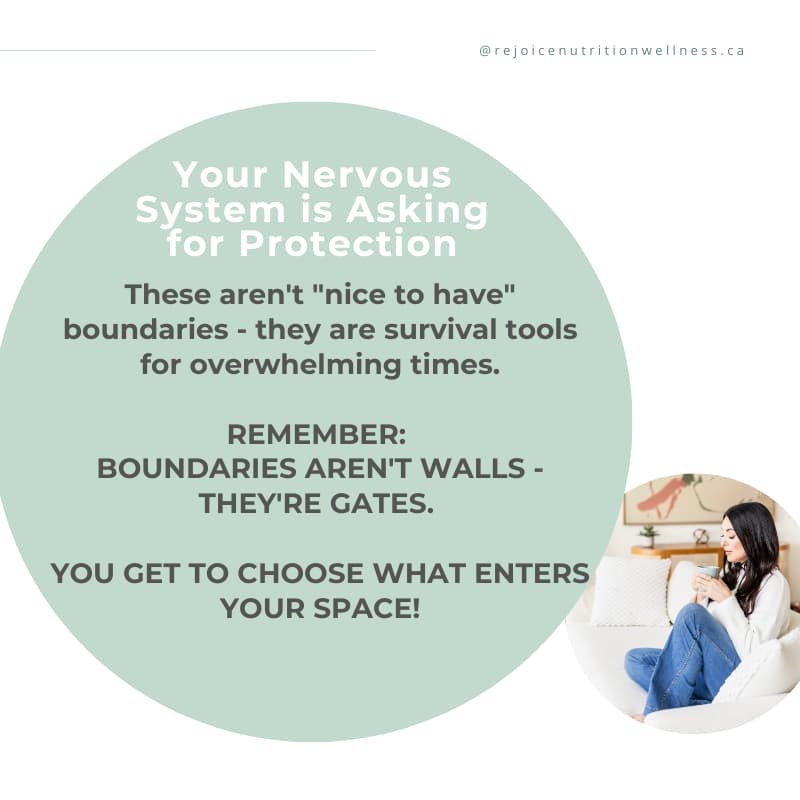
Before we dive into physical practices, let’s address the foundation: boundaries. These aren’t just “nice to have” – they’re essential nervous system protection strategies that I’ve seen transform women’s health when implemented consistently.
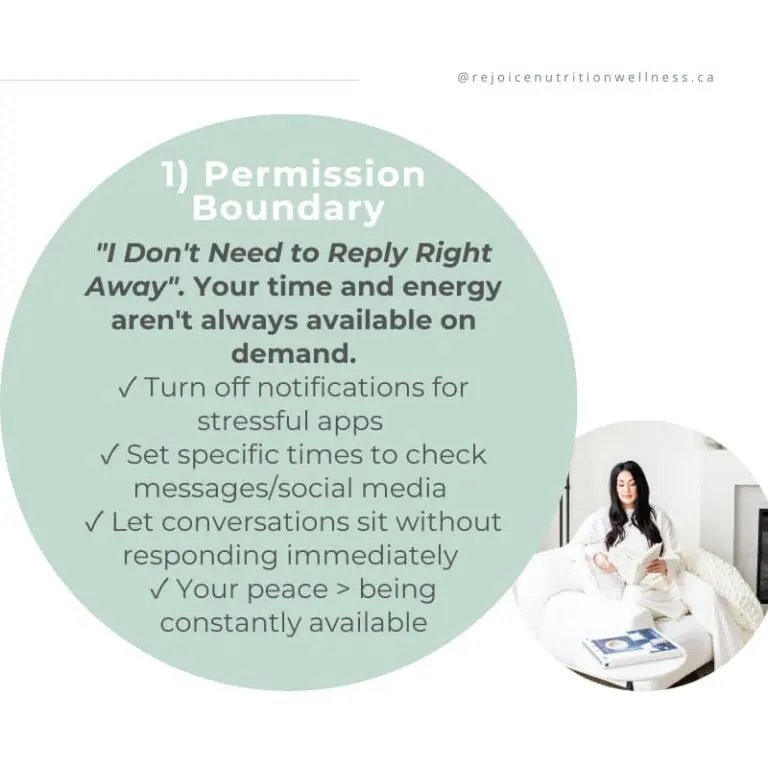
1. Permission Boundary: “I Don’t Need to Reply Right Away”
Your time and energy aren’t always available on demand. This boundary recognizes that constant availability keeps your nervous system in a state of hypervigilance.
How to implement:
Turn off notifications for stressful apps
Set specific times to check messages/social media
Let conversations sit without responding immediately
Remember: Your peace > being constantly available
Why it works: When you’re not constantly “on call,” your nervous system can actually rest and restore instead of staying in fight-or-flight mode.
2. Consumption Boundary: “I Choose What I Consume”
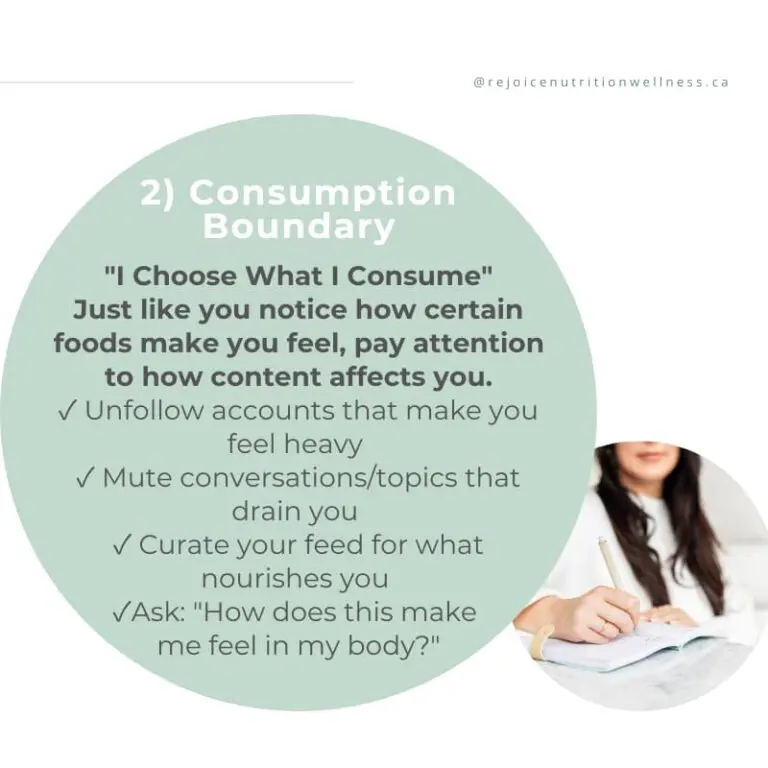
Just like you notice how certain foods make you feel, pay attention to how content affects you. Your nervous system responds to everything you take in.
How to implement:
Unfollow accounts that make you feel heavy
Mute conversations/topics that drain you
Curate your feed for what nourishes you
Ask: “How does this make me feel in my body?”
Why it works: Consuming uplifting, nourishing content keeps your nervous system in a positive, calm state rather than triggering stress responses.
3. Emotional Boundary: “I Don’t Have to Carry Everyone’s Stress”
You can care without carrying the weight of everything. Your nervous system has a capacity limit.
How to implement:
Limit overwhelming content to specific time windows
Step away when you feel heavy or drained
Recognize when you’ve hit your emotional capacity
Practice compassionate detachment
Why it works: Emotional overwhelm triggers chronic stress responses. Protecting your emotional capacity allows your nervous system to stay regulated.
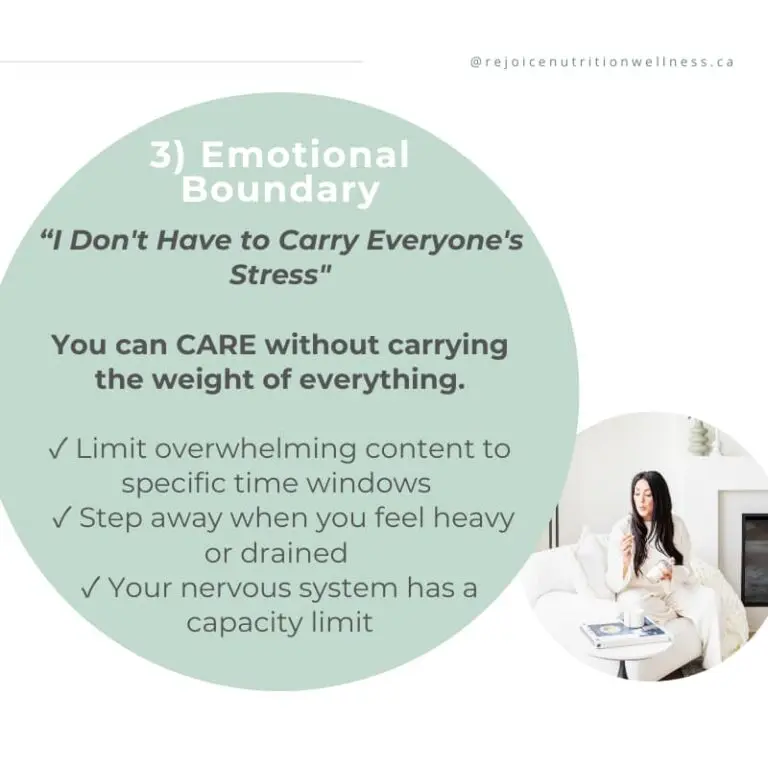
4. Conversation Boundary: “Not Every Discussion is Mine to Have”
You don’t owe anyone a debate, explanation, or your opinion. Some conversations are energy drains disguised as engagement.
How to implement:
Say “I’m taking a break from heavy topics”
Redirect conversations to lighter subjects
Exit discussions that drain your energy
Protect your peace like your life depends on it
Why it works: Engaging in draining conversations keeps your nervous system activated. Choosing which conversations to enter preserves your energy for what matters.
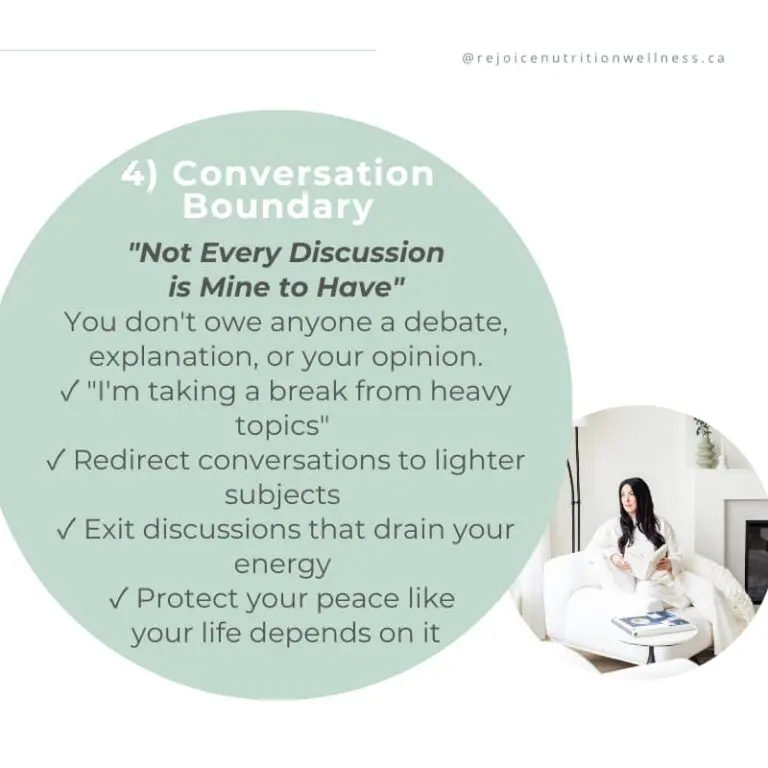
5. Presence Boundary: “I Choose Where I Place My Attention”
What you focus on grows. Choose wisely. Instead of mindless scrolling, try:
How to implement:
Feet on the ground for 5 minutes
Make tea mindfully (chamomile, passionflower)
Call someone who fills your heart
Read something that inspires you
Take a walk without your phone
Why it works: Intentional attention placement trains your nervous system to focus on nourishing, calming inputs rather than chaotic, overstimulating ones.
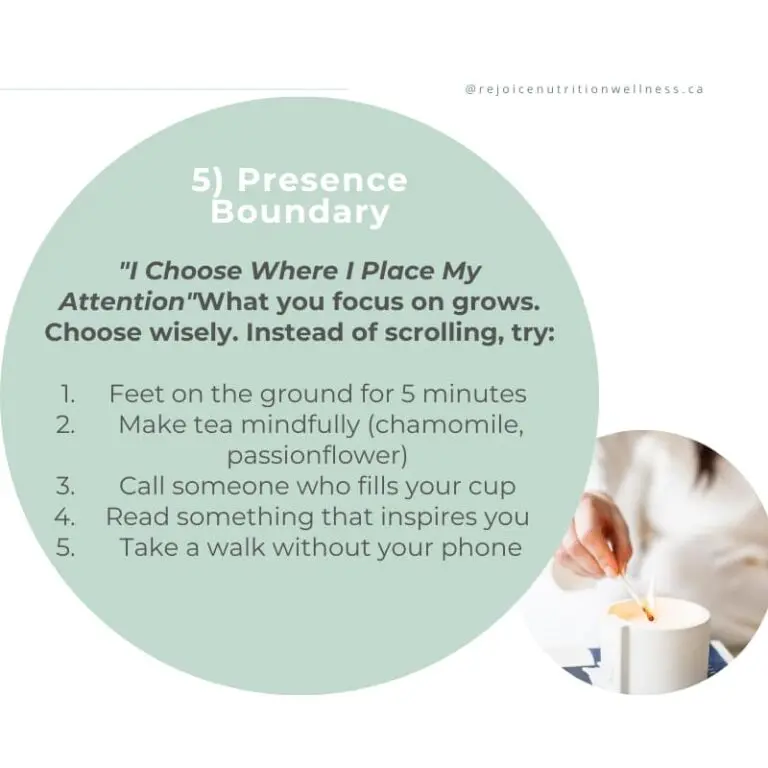
5 Physical Practices to Support Your Nervous System

Now that you’ve established protective boundaries, let’s add physical practices that actively restore and regulate your nervous system:
1. The 4-7-8 Breath Reset
This simple breathing technique activates your vagus nerve and immediately shifts you into a parasympathetic state.
How to do it:
Inhale through your nose for 4 counts
Hold your breath for 7 counts
Exhale through your mouth for 8 counts
Repeat 3-4 times whenever you feel stressed or wired
The science: Research published in the Journal of Clinical Medicine shows that controlled breathing exercises significantly reduce cortisol levels and activate the parasympathetic nervous system¹.
Best used: Before meals to improve digestion, before bed to enhance sleep, or anytime you feel overwhelmed.
2. Cold Water Face Reset
This technique leverages the dive response – an evolutionary mechanism that immediately calms your nervous system.
How to do it:
Fill a bowl with cold water (50-60°F)
Hold your breath and dunk your face for 15-30 seconds
Or simply splash cold water on your face and temples
The science: Cold water on the face stimulates the vagus nerve and can reduce heart rate by 10-25% within seconds².
Best used: During acute stress, panic moments, or when you need an immediate reset.

3. Grounding
Also known as “earthing,” this practice helps regulate your body’s electrical systems and reduce inflammation.
How to do it:
Remove shoes and socks
Stand barefoot on grass, sand, soil, or concrete for 5+ minutes
Focus on feeling the earth beneath your feet
The science: A study in the Journal of Environmental and Public Health found that grounding significantly reduces cortisol levels and improves sleep quality³.
Best used: First thing in the morning to set a calm tone for your day, or in the evening to help wind down.
4. The Gentle Shake
Animals naturally “shake off” stress after escaping danger. This technique helps discharge stored tension from your nervous system.
How to do it:
Start by gently shaking your hands for 30 seconds
Move to your arms, then your shoulders
Let the movement spread through your whole body
Continue for 1-2 minutes, allowing any natural movements
The science: Somatic experiencing research shows that gentle movement helps complete the stress response cycle and prevents trauma from getting stuck in the body⁴.
Best used: After stressful situations, at the end of a long day, or whenever you feel “stuck” tension.

5. Warm Oil Self-Massage
This Ayurvedic practice stimulates pressure points that activate your parasympathetic nervous system.
How to do it:
Warm coconut or massage oil slightly
Massage your ears, temples, and the back of your neck
Use slow, circular motions for 2-3 minutes
Focus on breathing deeply throughout
The science: Studies show that self-massage increases oxytocin (the bonding hormone) and decreases cortisol by up to 31%⁵.
Best used: Before bed as part of your wind-down routine, or anytime you need to feel more grounded and calm.
Nourishing Your Nervous System From Within
Your nervous system also needs specific nutrients to function optimally. Here are my top recommendations:
Key Supplements for Nervous System Support
(Always consult your healthcare provider before starting new supplements)
Magnesium Glycinate (300-400mg before bed): Essential for muscle relaxation and neurotransmitter production
Adrenal Pro Complex: A comprehensive adaptogenic blend containing ashwagandha, rhodiola, and other stress-supporting herbs
L-Theanine (100-200mg as needed): Promotes calm alertness without drowsiness
Nervous System-Nourishing Recipes
Golden Milk Latte: [Click Here for My Fav Golden Milk recipe] – This anti-inflammatory elixir contains turmeric, cinnamon, and healthy fats that support nervous system health.
Calming Green Tea Latte: [Click Here for My Fav Green Tea Latte recipe] – Packed with L-theanine and adaptogens to promote relaxed focus.


The Mindset Shifts That Support Nervous System Recovery
Beyond the physical practices, how you think about stress and rest plays a crucial role:
“My body is always working FOR me, not against me”
When you feel anxious or stressed, remember your nervous system is trying to protect you. Thank it and gently guide it back to safety.
“I have permission to rest without earning it”
Rest isn’t a reward for productivity – it’s a biological necessity. Your nervous system needs downtime to repair and restore.
“Slow is the new fast”
In a culture of hustle, choosing to move slowly and intentionally is revolutionary. Your nervous system thrives on predictable, gentle rhythms.
Your Quick Evening Wind-Down Script
Try reading this to yourself or recording it in your own voice:
“I am safe. My day is complete. I release any tension I’ve been holding in my jaw, my shoulders, my stomach. With each breath out, I let go of what no longer serves me. My body knows how to rest. My mind knows how to be still. I trust my body’s wisdom to restore and renew while I sleep. I am exactly where I need to be.”

Ready for Personalized Support?
If you’re feeling called to go deeper into nervous system healing and create lasting change in your life, I’d love to support your journey.
Book a complimentary 15-minute discovery call to explore:
Your unique nervous system patterns and triggers
Personalized strategies for your lifestyle and goals
How one-to-one coaching might support you
Practical next steps for sustainable nervous system health
Sometimes we need more than tips and tools – we need someone who truly understands the nervous system and can guide us through the deeper reconnection work. I’m here when you’re ready.
Research References
Hopper, S. I., et al. (2019). Effectiveness of diaphragmatic breathing for reducing physiological and psychological stress in adults: a quantitative systematic review. JBI Database of Systematic Reviews and Implementation Reports, 17(9), 1855-1876. PubMed ID: 31436595
Khurana, R. K., & Wu, R. (2006). The cold face test: a non-baroreflex mediated test of cardiac vagal function. Clinical Autonomic Research, 16(3), 202-207. PubMed ID: 16491317
Chevalier, G., et al. (2012). Earthing: health implications of reconnecting the human body to the Earth’s surface electrons. Journal of Environmental and Public Health, 2012, 291541. PubMed ID: 22291721
Levine, P. A. (2010). In an Unspoken Voice: How the Body Releases Trauma and Restores Goodness. North Atlantic Books.
Field, T., et al. (2005). Cortisol decreases and serotonin and dopamine increase following massage therapy. International Journal of Neuroscience, 115(10), 1397-1413. PubMed ID: 16162447